
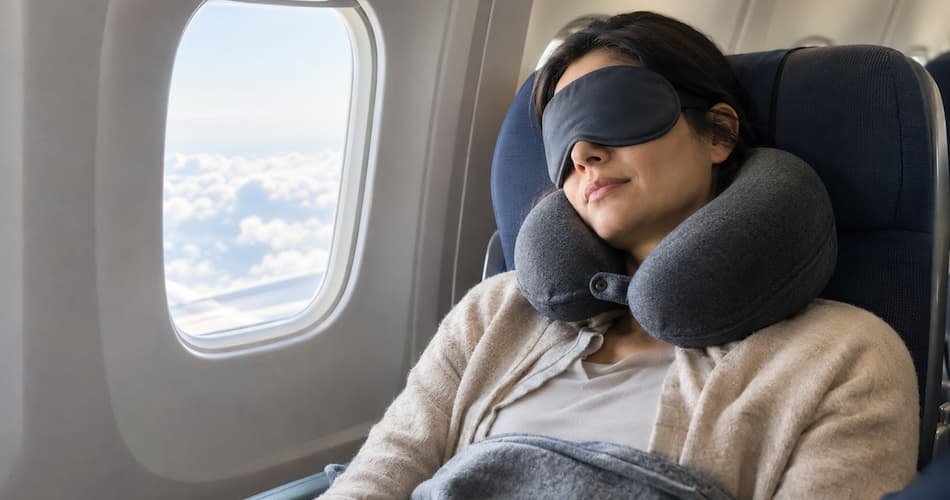
Getting quality rest at 35,000 feet can feel impossible when cabin noise, bright lights, and limited legroom surround you. Fortunately, how to sleep better on long-haul flights comes down to a few smart choices: supporting your neck, blocking light and noise, and creating a relaxing in-flight routine. Packing versatile items from your solo retreat essentials checklist can also help you stay comfortable throughout your journey. With the right airplane sleep essentials and practical long-haul flight comfort tips, you can make economy-class travel more restful and arrive better prepared to enjoy your destination.
At a Glance
Sleeping comfortably on a long-haul flight takes a little planning. Here are the key tips to help you rest better in the air and feel more prepared when you land.
- Choose the right seat: Pick a window seat away from busy cabin areas for fewer disturbances.
- Pack sleep essentials: Carry a supportive travel pillow, eye mask, and earplugs or noise-cancelling headphones.
- Follow a sleep routine: Reduce distractions, get comfortable, and relax before trying to sleep.
- Adjust to local time: Plan your sleep around your destination to help manage jet lag.
- Watch food and drinks: Limit caffeine and avoid alcohol as a sleep aid.
- Plan for arrival: Get natural daylight, stay hydrated, and keep your first day manageable.
How to Sleep Better on Long-Haul Flights: 12 Tips
The best flight sleep tips focus on three things: reducing physical discomfort, limiting disturbances, and working with your natural sleep rhythm. If you enjoy planning trips around better rest, exploring sleep tourism experiences can also inspire ways to make sleep a priority while travelling. Here’s how to put these tips into practice.
1. Choose the Right Seat for Sleeping
Your seat can influence how comfortably you rest during a long flight.
| Seat type | Best advantage | Potential drawback |
| Window seat | Space to lean against the cabin wall | Harder to leave your seat |
| Aisle seat | Easy access for movement breaks | More passenger disturbances |
| Extra-legroom seat | Additional space to stretch | May cost extra |
| Seat away from galleys | Less activity nearby | Availability varies |
If uninterrupted rest matters most, a window seat away from busy cabin areas is often a good choice. Check the aircraft layout and recline restrictions before booking.
2. Invest in a Supportive Travel Pillow
A travel pillow for sleeping on a plane can help prevent your head from falling forward and reduce neck discomfort.
- Memory foam: Structured support for your neck.
- Adjustable pillow: A customized fit for different sleeping positions.
- Inflatable pillow: Compact and easy to pack.
- Chin-support design: May help if your head tends to fall forward.
Choose a pillow that keeps your head comfortable without forcing your neck into an awkward position. If possible, test it before your journey.
3. Block Out Light With an Eye Mask
Cabin lights, reading lamps, and sunlight can interrupt your rest. A comfortable sleep eye mask for travel is a simple way to improve darkness and learn how to sleep better on long haul flights without depending on the airline’s lighting schedule.
Look for soft fabric, an adjustable strap, and a design that blocks light around your nose. Contoured masks may suit travelers who dislike pressure on their eyelids.
Keep your eye mask within easy reach so you can settle down without unpacking your entire carry-on.
4. Reduce Cabin Noise
Engine sounds and conversations can make sleeping difficult. Both earplugs and noise-cancelling headphones can help, but they suit different needs.
| Option | Best for |
| Foam earplugs | Affordable, lightweight noise reduction |
| Reusable earplugs | Travelers who prefer a reusable option |
| Noise-cancelling headphones | Reducing steady background noise and listening to relaxing audio |
Choose comfortable earplugs if bulky headphones bother you while resting. If you also want headphones for entertainment and everyday travel, noise-cancelling models may offer better overall value.
Neither option eliminates every sound, so ensure you can hear important safety announcements.
5. Wear Comfortable, Breathable Layers
Restrictive clothing can make sitting for hours uncomfortable. For better sleep comfort on long flights, choose loose-fitting trousers, breathable tops, soft socks, and a lightweight cardigan.
Cabin temperatures vary, so layers let you adjust without relying entirely on the airline blanket. Avoid tight waistbands and bulky accessories that create pressure when you recline.
Don’t forget these essential items for your airport bag to make your packing more complete.
6. Follow a Simple In-Flight Sleep Routine
A familiar routine can make it easier to settle down in an unfamiliar environment.
- Visit the restroom before trying to sleep.
- Adjust your seat when permitted.
- Position your pillow and arrange your blanket.
- Put on your eye mask and earplugs or headphones.
- Listen to quiet, familiar audio if it helps you relax.
- Put your phone away and give yourself time to rest.
A consistent in-flight sleep routine doesn’t guarantee uninterrupted sleep, but it can reduce distractions and help you relax.
7. Time Your Sleep Around Your Destination
If you’re crossing several time zones, consider your destination’s local time when planning how to sleep on a plane.
- If it’s nighttime at your destination, try to sleep during part of the flight.
- If it’s daytime there, consider staying awake for some of the journey if you feel rested enough.
- If you’re already sleep-deprived, prioritize getting some rest rather than forcing yourself to stay awake.
Your approach should depend on your departure time, destination and level of tiredness. Avoid turning your sleep schedule into another source of travel stress.
8. Be Mindful of Caffeine, Alcohol and Meals
Your food and drink choices can influence how easily you fall asleep.
- Limit caffeine in the hours before your planned sleep period.
- Avoid alcohol as a sleep aid, because it can disrupt sleep quality.
- Choose a comfortable meal if large meals leave you feeling bloated.
- Drink water regularly to manage thirst and maintain hydration.
For additional practical advice on hydration and movement, learn how to stay healthy during flights.
9. Make Economy-Class Sleeping More Comfortable
You don’t need a premium cabin to improve your chances of resting.
- Recline your seat when permitted and considerate of the passenger behind you.
- Support your neck to avoid awkward head positions.
- Use a small cushion for lower-back support if needed.
- Adjust your position whenever you feel uncomfortable.
- Get up and move periodically when it’s safe to do so.
These simple economy-class flight comfort tips can reduce discomfort, although sleeping upright may still feel difficult for some travelers.
10. Pack a Long-Haul Flight Sleep Kit
A few well-chosen essentials can make a difference without overloading your carry-on.
Your flight comfort checklist
- Supportive travel pillow
- Comfortable eye mask
- Earplugs or noise-cancelling headphones
- Warm socks and an extra layer
- Lip balm and moisturizer
- Refillable water bottle
- Phone charger and downloaded audio
- Small pouch for accessible essentials
Pack carry-on beauty essentials for ultimate skincare even in the flight.
Smart shopping tip: If you’re buying travel accessories, compare a few carefully selected pillows, eye masks and headphones. Prioritize comfort, portability, durability and easy cleaning over unnecessary features. Affiliate recommendations can be included here with a clear disclosure.
11. Don’t Rely on Sleeping Pills
Using medication simply to force yourself to sleep during a flight can carry risks. Some sedating medicines cause prolonged drowsiness, interact with other medications, or may be unsuitable for particular travelers.
Don’t experiment with a new sleep medication during your journey. those who wat to know how to sleep better on long-haul flights, experimenting with sleeping pills is dangerous. If you’re considering medication or melatonin for travel-related sleep difficulties, consult a qualified healthcare professional about suitability and timing.
Avoid combining alcohol with sedating medicines unless specifically advised by a healthcare professional.
12. Make Your First Day After Landing Easier
Even a comfortable flight may leave you tired. Give yourself time to adjust rather than planning an exhausting first day.
- Get natural daylight at an appropriate time.
- Eat regular meals and drink water.
- Keep naps short if needed, while prioritizing safety if you’re very sleepy.
- Avoid scheduling too many demanding activities immediately after arrival.
- Allow time to settle into the local sleep schedule.
If you want to feel fresher after landing, our guide to looking fresh after a long flight offers additional practical ideas.
Want to Arrive Refreshed? Make Every Flight Count
Learning how to sleep better on long-haul flights starts with realistic expectations and a few thoughtful comfort choices. A supportive pillow, a comfortable eye mask, reduced noise, and a simple sleep routine can make even an economy-class journey more restful.
Prepare your essentials, give yourself time to unwind, and avoid putting pressure on yourself to achieve perfect sleep.
Frequently Asked Questions
1. How can I sleep better on long-haul flights?
Choose a comfortable seat, support your neck, block light and noise, limit caffeine before sleep and follow a relaxing in-flight routine.
2. What is the best seat for sleeping on a plane?
A window seat away from busy cabin areas is often a good choice because you can lean against the cabin wall with fewer aisle disturbances.
3. What should I pack to sleep comfortably on a plane?
Pack an eye mask, travel pillow, earplugs or headphones, comfortable layers and water. Choose essentials that address your personal comfort needs.
4. Do noise-cancelling headphones help you sleep on a plane?
They can reduce steady background noise and make resting easier. However, some travelers find lightweight earplugs more comfortable.
5. Should I sleep or stay awake on a long-haul flight?
It depends on your destination’s local time, flight schedule and tiredness. When practical, align sleep with the destination’s nighttime without deliberately depriving yourself of rest.
6. Does alcohol help you sleep on a plane?
Alcohol may initially make you feel sleepy, but it can disrupt sleep quality. It’s not a reliable way to improve in-flight rest.