Long-haul flights can make even a well-planned journey exhausting. Finding the best travel pillows for long flights can make a difference when your head keeps falling forward, and your neck feels unsupported. However, a comfortable pillow is only one part of getting proper rest in the air. The right choice depends on your sleeping position, seat preference, neck support needs, and packing space.
Follow these practical tips to sleep better on long-haul flights; you can manage cabin distractions and adjust your sleeping routine. Before buying one, understand the designs, materials, and features that matter most on long international flights.
At a Glance
- Best for structured support: Contoured memory foam pillows.
- Best for light packers: Inflatable travel pillows.
- Best for adjustable positioning: Wrap-around designs.
- Best for forward head movement: Chin-support pillows.
- Best for soft cushioning: Microbead pillows.
- Most important buying factors: Fit, support, firmness, breathability, portability, and washability.
Best Travel Pillows for Long Flights: What Makes a Good Choice?
A good airplane pillow should support your head without forcing your neck into an uncomfortable position. It should also fit your body, work with your preferred sleeping position, and remain manageable to carry.
Remember that the most expensive or heavily padded option isn’t automatically the most comfortable. A pillow that fits your neck properly can be more useful than a bulky design with extra cushioning.
Here are the features worth evaluating before spending your money.
Preparing for a More Comfortable Arrival
Getting some rest during your journey can make the arrival experience feel less exhausting, although a travel pillow cannot eliminate every effect of a long flight. After landing, a simple routine involving hydration, gentle skincare and a little time to refresh yourself can help. These practical tips on looking fresh after a long flight can help you prepare for the first few hours at your destination.
Why Your Regular Travel Pillow May Feel Uncomfortable
A traditional U-shaped pillow doesn’t work equally well for everyone. Some designs leave gaps around the neck, while others push the head forward or provide insufficient support beneath the chin.
Common reasons include:
- Incorrect height: Thick cushioning can push your head forward instead of keeping it comfortably supported.
- Poor fit: A loose pillow allows your head to move from side to side.
- Insufficient chin support: Your head may drop forward when you fall asleep.
- Excessive firmness: Dense cushioning can feel restrictive around the neck.
- Heat retention: Some foam and plush fabrics can feel warm during extended use.
The solution isn’t necessarily buying a different brand. It is finding a design that addresses the particular discomfort you experience.
Different Types of Travel Pillows Explained
Understanding pillow designs makes comparing products considerably easier.
| Pillow type | Best suited for | Advantages | Potential drawbacks |
| Memory foam | Travellers wanting structured cushioning | Contoured support and cushioning | Can be bulky and warm |
| Inflatable | Light packers | Compact when deflated; adjustable firmness | Requires inflation and careful adjustment |
| Wrap-around | Travellers wanting flexible positioning | Adjustable support around the neck | Some designs need getting used to |
| Chin-support | People whose heads drop forward | Additional support beneath the chin | Can feel restrictive |
| Microbead | Those preferring soft cushioning | Mouldable and flexible feel | May provide less structured support |
1. Memory Foam Travel Pillows
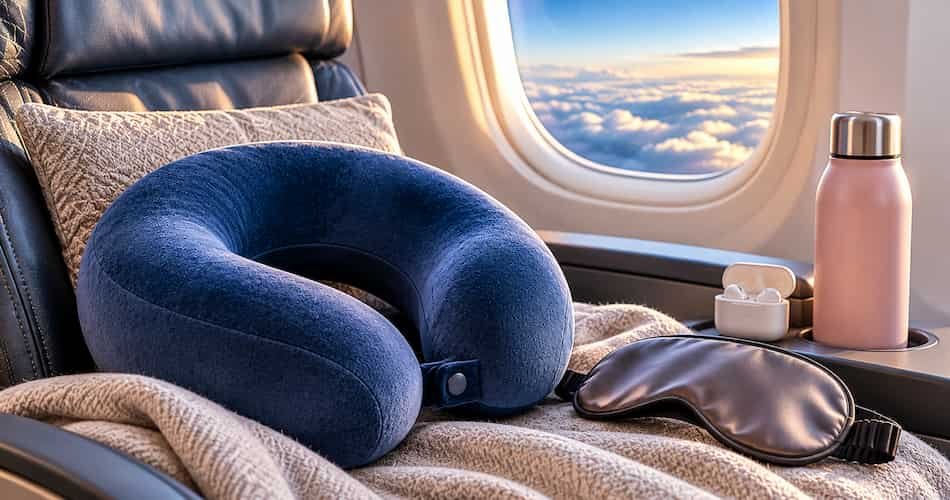
A memory foam travel pillow moulds around the neck and provides cushioning that feels more structured than loose-fill alternatives. Contoured versions may offer raised sides to support the head when it tilts.
Choose one if you prefer a firmer, more substantial feel. Check its height carefully, as excessive thickness can push your head forward. A removable, washable cover is another worthwhile feature.
2. Inflatable Travel Pillows
An inflatable travel pillow is particularly useful when luggage space matters. You can adjust its firmness by controlling how much air you add, then deflate it for compact storage.
However, overinflating can make the pillow feel rigid. It may also need occasional adjustment during use. Look for a soft outer cover and an easy-to-operate valve.
3. Wrap-Around Travel Pillows
Wrap-around designs provide cushioning around the neck rather than relying on the traditional U-shaped structure. Some feature adjustable closures or internal support to help stabilise the head.
They are worth considering if ordinary neck pillows leave uncomfortable gaps. However, check how easily the design adjusts and whether it feels too warm or restrictive.
4. Chin-Support Travel Pillows
If your head repeatedly falls forward while sleeping upright, a travel pillow with chin support may be worth considering.
These designs add cushioning under the chin or around the lower face. They can help limit forward head movement, although comfort depends on the fit and the amount of pressure around your jaw.
5. Microbead Travel Pillows
Microbead pillows contain tiny filling particles that shift as you move, creating a soft, mouldable cushion.
They may appeal to travellers who dislike dense foam. However, the softer filling may not provide the same structured support as a contoured memory foam or wrap-around design.
Choosing Travel Comfort Essentials for Independent Journeys
When travelling alone, you have to think about your own comfort throughout the journey, from airport transfers to long hours in the air. Choosing a lightweight pillow, keeping essential accessories accessible and avoiding unnecessary luggage can make independent travel easier to manage. If you’re planning an independent getaway, these practical tips for solo travel for women over 40 can help you prepare with greater confidence.
What to Look for Before Buying a Travel Pillow
These are the features that deserve the most attention when comparing airplane neck pillows.
1. Neck, Head and Chin Support
Look for a design that supports the areas where your head tends to move.
- Head falling forward: Consider additional chin support.
- Head tilting sideways: Look for raised side cushioning.
- Head leaning towards the window: Consider a pillow with lateral support and a shape that works with the window seat.
No pillow can guarantee a particular sleeping position, but suitable support can make resting upright more comfortable.
2. Height, Firmness and Fit
This is one of the most overlooked buying factors.
A pillow should fit around your neck without squeezing it or pushing your head unnaturally forward. Check the product dimensions, adjustable closure and available sizes.
If possible, try it while sitting in an upright chair. Your chin should feel comfortable, and the pillow should not force your head into an awkward position.
3. Material and Breathability
If you get warm easily, pay attention to the outer fabric as well as the filling.
Look for breathable covers, soft-touch materials and removable fabric covers. Cooling claims alone aren’t enough; consider actual fabric composition and whether the cover can be washed.
4. Portability and Storage
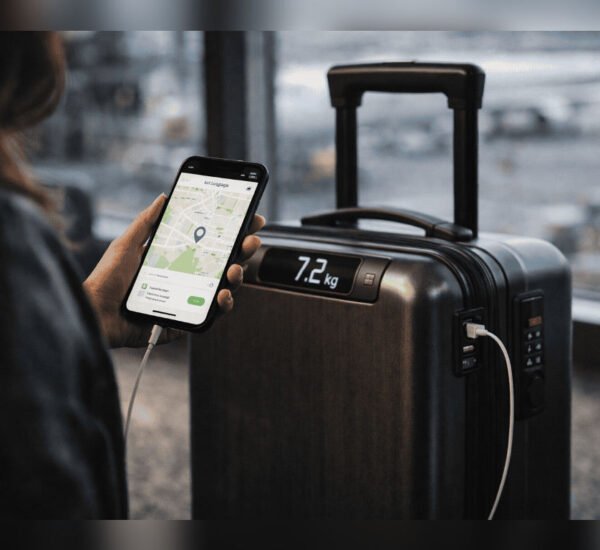
A comfortable pillow isn’t particularly convenient if it occupies half your carry-on. Before purchasing, check whether it compresses, comes with a storage pouch or can attach to your luggage. If you’re planning to upgrade your travel gear, understanding smart luggage features and benefits can also help you choose a suitcase that accommodates your travel essentials more conveniently.
Check:
- Weight and packed dimensions.
- Compression or folding options.
- Included storage pouch.
- Luggage attachment loop or clip.
- Ease of carrying through airports.
An inflatable or compressible pillow may suit minimalist travellers, while frequent long-haul flyers may prefer carrying a larger but more supportive design.
5. Washability and Hygiene
Travel pillows collect sweat, makeup, dust and everyday dirt.
A removable, machine-washable cover makes cleaning easier. If the entire pillow is washable, follow the manufacturer’s care instructions. Never assume memory foam or inflatable components can be machine-washed.
Memory Foam vs Inflatable vs Wrap-Around: Which Should You Buy?
| Buying priority | Consider this design | Why |
| Structured cushioning | Memory foam | More substantial support |
| Minimal packing space | Inflatable | Deflates for storage |
| Flexible positioning | Wrap-around | Can be adjusted around the neck |
| Forward head movement | Chin-support | Additional chin cushioning |
| Soft, mouldable feel | Microbead | Flexible filling |
My buying recommendation: If you regularly take overnight international flights, prioritise fit and support over compactness alone. If you travel occasionally and have limited cabin-bag space, an inflatable design may be a more practical purchase.
Which Travel Pillow Is Best for Your Sleeping Position?
Your preferred seat and sleeping position should influence your choice.
| Travel situation | What to prioritise |
| Window seat | Side cushioning and comfortable leaning support |
| Middle seat | Balanced support on both sides |
| Aisle seat | Secure head support that doesn’t rely on the window |
| Head falls forward | Chin-support design |
| Head tilts sideways | Raised lateral cushioning |
| Light packer | Inflatable or compressible construction |
A window seat gives you an additional surface to lean against, but don’t assume every pillow will fit comfortably between your head and the aircraft wall.
Features Worth Paying For (and What You Can Skip)
Worth paying extra for:
- Adjustable closures for a more personalised fit.
- Removable, washable covers.
- Supportive contours that suit your sleeping position.
- Durable construction and quality stitching.
- A practical storage pouch or attachment loop.
Not always worth paying extra for:
- Excessively thick cushioning.
- Multiple accessories you won’t use.
- Premium branding without meaningful design benefits.
- Cooling claims without clear material details.
- Complicated features that make the pillow harder to adjust.
A sensible purchase is one that solves your particular comfort problem, not one with the longest feature list.
How to Use a Travel Pillow Correctly on a Plane
Even a well-designed pillow can feel uncomfortable if positioned incorrectly.
- Place the pillow according to its intended orientation; check the manufacturer’s instructions.
- Adjust the closure so it feels secure without squeezing your neck.
- Check that your head isn’t being pushed forward.
- Position the supportive section where your head tends to tilt.
- Make small adjustments before settling down to sleep.
Avoid forcing your neck into a fixed position. Change your posture if you experience discomfort.
What to Pack Alongside Your Travel Pillow
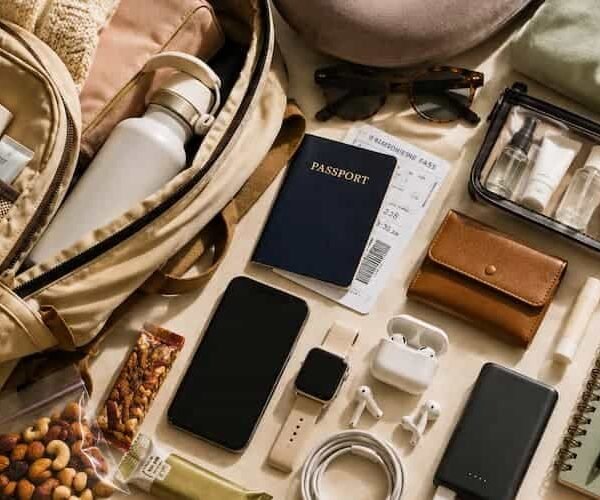
A supportive neck pillow is useful, but a few smaller essentials can make a long journey considerably more comfortable. Keep your eye mask, earplugs, headphones, lip balm and other frequently used items within easy reach instead of placing everything in the overhead compartment. Follow practical airport bag essentials checklist can help you organise the items you’ll need throughout your journey.
Other Accessories That Make Long-Haul Flights More Comfortable
A travel pillow is only one part of a comfortable flight setup. Consider adding:
- Sleep mask: Blocks cabin light and makes resting easier.
- Earplugs: Help reduce surrounding noise.
- Comfortable headphones: Useful for entertainment and reducing distractions.
- Lightweight blanket or wrap: Adds warmth when the cabin feels cold.
- Lip balm and moisturiser: Help manage the dry cabin environment.
Choose accessories that fit comfortably in your carry-on rather than packing every available travel gadget.
Your neck pillow addresses one part of in-flight comfort, but your eyes and skin need attention too. A comfortable sleep mask can block unwanted light, while a few lightweight skincare products can help manage dryness during long journeys. Packing the right carry-on beauty essentials means you can maintain a simple self-care routine without filling your bag with unnecessary products.
Conclusion: Make Your Next Long Flight More Comfortable
Choosing the best travel pillows for long flights comes down to finding the right balance between support, fit, comfort and portability. Memory foam suits travellers who prefer structured cushioning, while inflatable and wrap-around designs offer different practical advantages. A thoughtfully chosen pillow can make resting during long journeys more comfortable and help you arrive feeling better prepared.
Comfortable travel is not just about reaching your destination; it’s also about giving yourself enough time and space to rest along the way. For travellers who want holidays to feel restorative rather than exhausting, exploring sleep-focused travel experiences offers another perspective on making quality rest an important part of travel planning.
Frequently Asked Questions
1. What is the best type of travel pillow for long flights?
The best type depends on your sleeping position and support needs. Memory foam suits travellers who prefer structured cushioning, inflatable pillows are useful for light packers, and wrap-around or chin-support designs may suit people who struggle with head movement.
2. Are memory foam travel pillows better than inflatable ones?
Neither is universally better. Memory foam offers a more substantial feel, while inflatable pillows are easier to pack and allow firmness adjustments. Your comfort preference, luggage space and desired support should determine your choice.
3. How do I stop my head from falling forward when sleeping on a plane?
Consider a travel pillow with additional chin support or an adjustable wrap-around design. Check its height and fit to ensure it doesn’t push your head forward. Avoid tightening the pillow excessively around your neck.
4. How should a travel pillow fit around your neck?
It should feel secure without squeezing your neck or forcing your chin forward. The cushioning should support your head in a comfortable position, with no uncomfortable gaps or excessive pressure.
5. Are expensive travel pillows worth buying?
Not necessarily. A higher price may reflect better materials, adjustability or construction, but it doesn’t guarantee a better fit. Compare dimensions, support, washability and portability before deciding how much to spend.